Field notes from the edge.
What our engineers learned this week. Hands-on technical deep-dives, postmortems, and strategy frameworks.

 AI
AIThree Recent Chrome Releases Fix 1,442 Flaws, More Than Prior 23 Updates Combined
Google fixed an unprecedented 1,442 security vulnerabilities across three recent Chrome releases (versions 149, 150, and 151), with versions 149 and 150 alone addressing more flaws than the previous 23 updates combined. Chrome 151, released Wednesday, patched 370 additional vulnerabilities, with 349 identified internally by Google. This represents a significant escalation in both vulnerability dis
 AI
AIResearchers Show a Single Malicious Webpage Visit Can Compromise Tor Browser
Security researchers at Nebula Security disclosed CVE-2026-10702, a high-severity Firefox JIT (Just-In-Time compiler) vulnerability that enables arbitrary code execution through a single malicious webpage visit, requiring no user interaction. The flaw affected both Firefox and Tor Browser, with Mozilla addressing it in Firefox version 151.0.3. The zero-click nature of the exploit makes it particul
 AI
AIFirefox 152 understands “Sssh!”
Firefox 152 introduces enhanced tab audio management with quick mute commands, experimental JPEG XL support, and improved tab-sharing capabilities across devices. The release comes as Google Chrome continues phasing out Manifest V2 extensions, potentially disadvantaging ad-blocking functionality. Mozilla's rapid release cycle and new public roadmap demonstrate active development commitment to main
 AI
AI152 Chrome Wallpaper Extensions with 105K Installs Linked to Adware and Fake Traffic
Cybersecurity researchers have identified 152 malicious Google Chrome extensions disguised as wallpaper and new tab add-ons that distribute potentially unwanted programs (PUPs). These extensions, spread across 38 publisher accounts and linked to three brand backends, have been installed approximately 105,000 times, representing a significant adware and fake traffic distribution network.
 AI
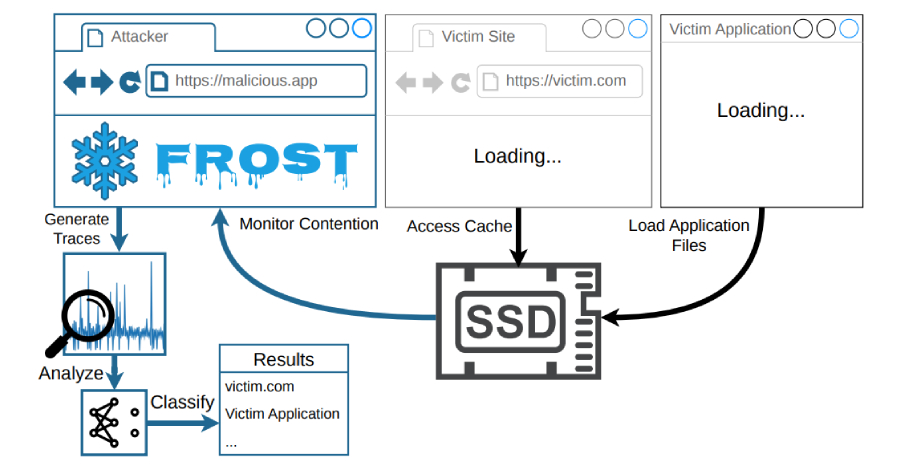
AINew FROST Attack Lets Websites Track What Sites and Apps You Open via SSD Timing
Researchers at Graz University of Technology have discovered FROST, a new attack vector that allows malicious websites to track users' browsing activity and application usage through JavaScript-based SSD timing analysis. The attack requires no special permissions, native code, or browser extensions, operating silently in the background by monitoring storage drive contention patterns.
 AI
AIFirefox integrates an ad-blocker, but not to block ads
Firefox 149 has quietly integrated Brave's Rust-based ad-blocking engine (adblock-rs) into its codebase, but the feature is disabled by default and not intended for consumer ad-blocking purposes. Mozilla appears to be experimenting with the technology for other use cases, while the privacy-focused Waterfox browser fork is actively testing the same engine as a built-in ad-blocker. Users can manuall