Field notes from the edge.
What our engineers learned this week. Hands-on technical deep-dives, postmortems, and strategy frameworks.


Firefox 156 arrives with a forest of forks in its wake
Mozilla and MZLA have delivered the latest releases in their new fortnightly cycle, but users who dislike the faster pace have alternatives. Firefox 156 is trickling out to users. The release notes only mention two new features: for Mac users, there's now an option in Settings to automatically launch the app at login. This vulture has received criticism for saying this in some

Admins, you've been warned: The clock is ticking on Edge's IE Mode
Microsoft has reminded administrators that Internet Explorer mode in Edge is guaranteed support only through 2029, so it is time to get those legacy migrations moving. Internet Explorer mode lets enterprises continue using legacy websites within Edge rather than relying on the retired Internet Explorer browser. It uses the Trident MSHTML engine from Internet Explorer 11 and per

KDE turns 30 and someone's brought an AI-native desktop proposal
KDE's annual conference takes place this weekend at Graz University of Technology in Austria, with an AI-native desktop proposal likely to divide attendees. The KDE project is celebrating its 30th anniversary this year, giving delegates at the Akademy conference in Graz another reason to raise a glass. The conference begins on Saturday, September 19, and registration remains op
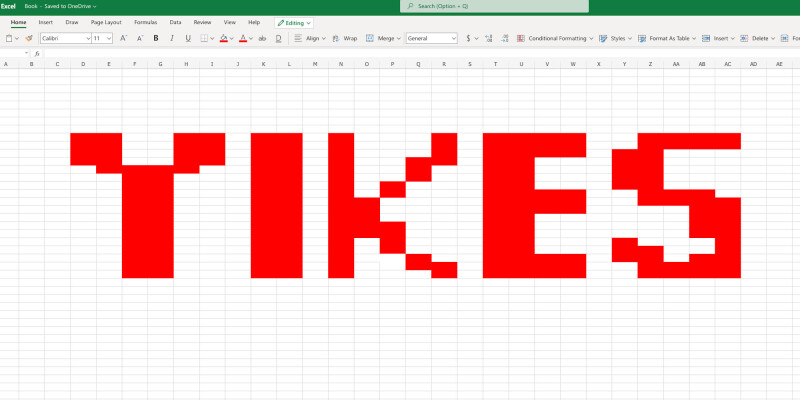
Microsoft fixes the fix that broke Excel paste – partly
Microsoft has issued a partial fix for the Excel bug that causes paste operations to fail. The hotfix applies only to Excel 2016, and Microsoft warns that pasting may still fail in workbooks containing conditional formatting. Earlier in September, Microsoft released a security update for Excel to address remote code execution and information disclosure vulnerabilities. It later

Omarchy gains $18.5M in backing, fresh converts – and fierce critics
In more than 30 years in the Linux business, we've never seen a distro win so much backing so fast – or make so many enemies. As we write, it's less than three weeks since we wrote about David Heinemeier Hansson's Omarchy Arch-based Linux. Much of Omarchy's success is due to the visibility of Hansson – better known as DHH – the man behind both the distro and the Ruby on Rails w
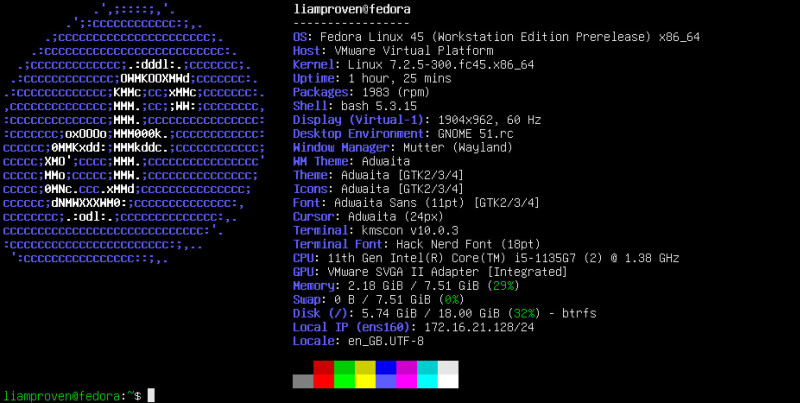
Fedora 45 beta drags the Linux console into the 21st century
Fedora Linux 45 beta has arrived with Linux kernel 7.2, a release-candidate build of GNOME 51, and extensive changes beneath the desktop. The biggest surprise is that Linux's legacy in-kernel console – the text-mode interface normally hidden beneath the GUI – has been replaced with a software-controlled alternative. The replacement is kmscon, a userspace terminal emulator that
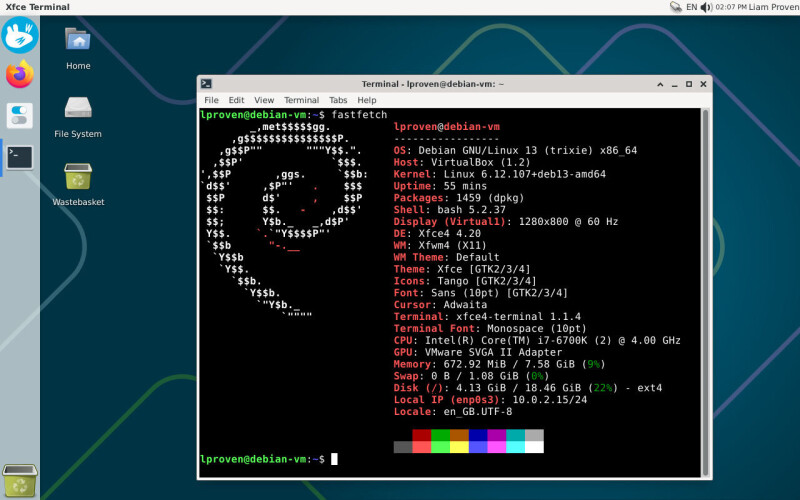
Give Xfce a Mac or Unity-style makeover
PART 2 Xfce's Panel Profiles app can rearrange your desktop, but getting every layout working properly still takes some manual tinkering. In part 1 of this two-part feature, we covered how to install Xfce's Panel Profiles tool and all the extra plugins it needs for its dozen alternative layouts: macOS, Unity, MATE or GNOME 2, several different Windows-like layouts, and half a d
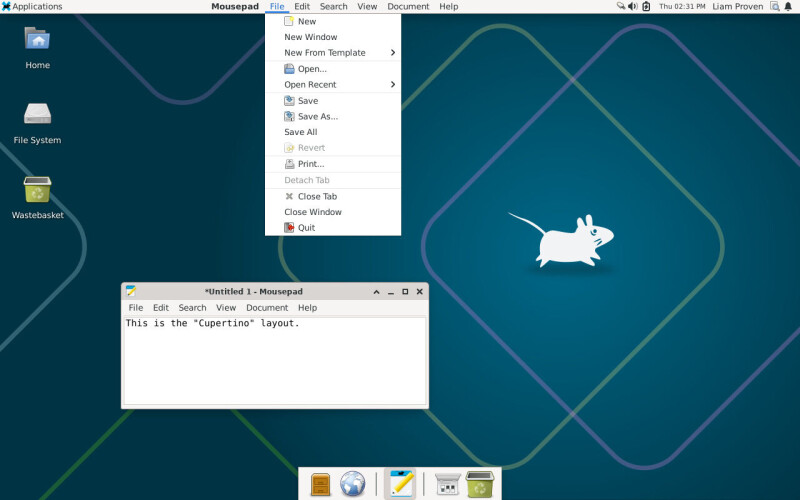
How to make Xfce look like almost any desktop you want
PART 1 Xfce is one of the oldest and smallest desktops, but it's also one of the most malleable: it can look and work like multiple other OSes. Best of all, an optional extra Xfce tool automates away most of the configuration. Xfce has been around for 30 years, undergoing several facelifts while remaining one of the most configurable and lightweight Linux desktops. It started o
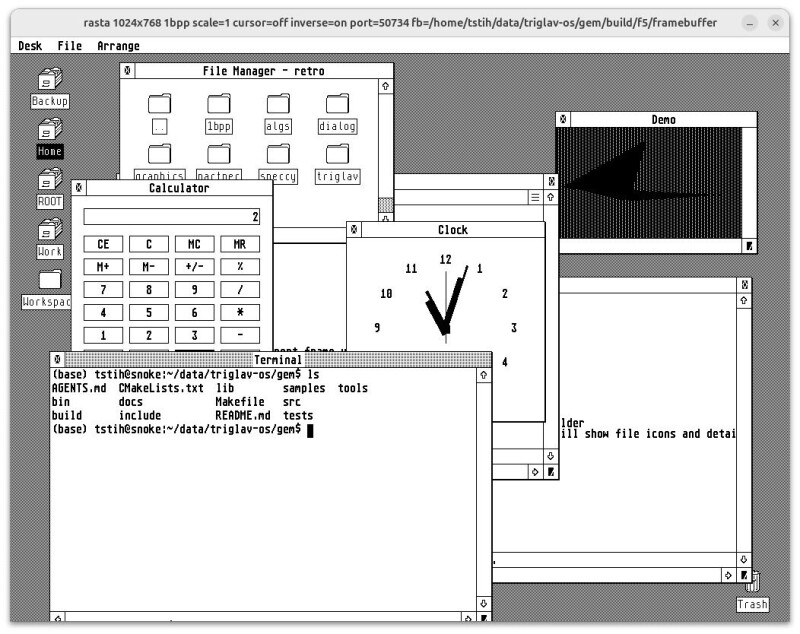
Digital Research's GEM opens a new window on Linux
Digital Research's GEM was one of the earliest graphical environments for PC compatibles, and an inspired hack has now resurrected it on Linux. GEM for Linux is a port of the Atari ST's graphical desktop, created by prolific Slovenian developer Tomaž Štih. Applications share a display server that can output directly through Linux's framebuffer or display the desktop in a window

Oracle says AI will save it from the SaaSpocalypse, not bring it on
Oracle has argued AI will strengthen its applications business, by giving customers new ways to use software and making them easier to implement. Co-CEO Mike Sicilia decided to defend applications in his first remarks on Oracle’s Q1 FY 2027 earnings call. “The introduction of AI is an accelerator, not a replacement for packaged applications,” he argued. “Before AI came along, a

German optics giant ditches greenfield SAP migration
Zeiss Group has ditched plans for a greenfield ERP migration to latest S/4HANA platform from SAP following years of struggle trying to move off an ageing R/3 system. The industrial optics company with revenue of around €11.896 billion said it was seeking to “realign” its ERP migration plans by moving its existing landscape to the new platform, a so-called "brownfield” migration

Microsoft goes after Salesforce and ERP users with AI-powered converter
Microsoft has found another use for AI: providing an off-ramp for Salesforce customers. The software giant on Wednesday gave the world “Dynamics 365 Activate,” software that executive veep for Apps and Agents Jeff Teper described as “a comprehensive, AI-powered tool that can help partners and customers move to Dynamics 365 faster, with less manual effort and lower migration ris

Microsoft closes the book on Publisher and unplugs Project Online
Microsoft will retire Project Online and remove Publisher from Microsoft 365 over the coming weeks, while support for perpetual versions of Publisher and for Office 2021 will end shortly afterward. Publisher, Microsoft's desktop publishing application, dates back to the Windows 3.x era. Microsoft announced its retirement in 2024 and will remove it from Microsoft 365 subscriptio

Another Microsoft team admits it’s struggling to handle flood of AI-generated code
A few weeks back we spotted Microsoft’s Exchange team admitting that AI has found so many bugs it hasn’t found time to deliver a Cumulative Update for the messaging server. And on Tuesday, the Microsoft Edge team revealed it’s also a bit overwhelmed by AI. “Rapid adoption of AI-assisted coding is enabling developers to build extensions faster than ever,” according to a post by

Oracle may be next in EU software licensing hot seat following SAP deal
The European Commission (EC) may be laying the groundwork for an investigation into Oracle's software licensing practices, according to reports. The scrutiny follows the EC's investigation into fellow enterprise software vendor SAP, which ended with the Commission accepting legally binding commitments from the German company to abolish reinstatement fees and reduce back-mainten

The search company that plants trees just launched a Linux browser to help Europe battle big tech
Berlin-based eco-conscious search outfit Ecosia is expanding its range of European-focused web browsers to include a Linux version, citing the growing number of users in the EU looking for open alternatives to the clutches of American tech giants. Calling Linux users a “critical tech community that has long called for data privacy, digital sovereignty, and sustainability,” Ecos

AI-assisted mushroom hunting is a recipe for a bad trip
If you see a mushroom in the forest and you're wondering if it's safe to eat or poisonous, don't ask an AI. Polish software engineer Piotr Migdał, a founding engineer at AI analytics and cost analysis firm Quesma, explained in a Wednesday blog post why trusting the mushroom insights of leading AI models is a dubious, potentially life-threatening idea in an experiment he ran. Ar

Firefox and Thunderbird hit the fortnightly release treadmill
Mozilla's Firefox 155 and subsidiary MZLA's Thunderbird 155 have arrived. Yes, already. Firefox officially debuted yesterday, although The Reg FOSS desk wasn't offered the upgrade until early evening. Thunderbird followed several hours later. If this seems soon after the previous releases, that's because it is. Mozilla announced Firefox's new fortnightly cadence in July, and MZ

Orbify.eu pitches warped Inception-style 3D maps for navigation
Orbify.eu, a two-year-old Norwegian startup, wants people to see the world in a new way – through a warped lens that bends rendered map scenes into the dream sequence perspective seen in Christopher Nolan's movie Inception. The geospatial biz, co-founded by Karsten Huitfeldt, is developing image processing software that folds a 3D map model onto a curved surface. The technique,