Field notes from the edge.
What our engineers learned this week. Hands-on technical deep-dives, postmortems, and strategy frameworks.

Rogue Behavior: OpenAI Reveals More Model Misalignment Incidents
The AI giant disclosed six examples of concerning model activity and published a new framework for investigating and disclosing such incidents.
Vectra AI Launches Ascent to Help Address New Era of AI-Driven Attacks
The new program expands Vectra AI's partner strategy as increasingly complex security environments and the growing use of AI create demand for broader AI expertise, services, and security outcomes.
EY Survey Finds Autonomous AI Implementation Outpaces Oversight
A new survey of senior AI execs shows that while organizations are rapidly deploying AI and autonomous systems, their process and controls are not keeping pace.
Cisco Zero-Day Highlights API Endpoint Authentication Issues
The authentication bypass flaw CVE-2026-76460 impacts Cisco's Identity Services Engine (ISE) and received a maximum 10 out of 10 CVSS score.

MFA Won't Save You From OAuth Consent Abuse
MFA is essential, but it cannot replace OAuth governance, least-privilege scopes, consent monitoring, and rapid revocation.
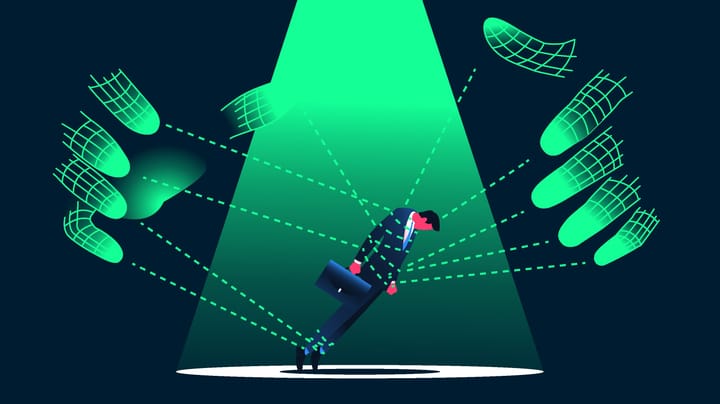
AI Agent Breaches Spanish Organization, Modifies Personal Data
AI-driven cyberattacks used to be exotic. Soon, it'll be odd if threat actors aren't using agents to do all of their bidding.

CISA Ditches Weekly Vulnerability Roundups for Risk-Based Focus
The move is consistent with the agency's advice on the need for organizations to prioritize the vulnerabilities that actually matter.

China's FamousSparrow APT Spies on US Politics in Latin America
Amid the US and China's fight for eco-colonial influence in Latin America, a stealthy backdoor has taken flight.
![[Virtual Event] Cybersecurity Outlook 2027](/media/blog-covers/1798.jpg)
[Virtual Event] Cybersecurity Outlook 2027

AI Security Spending Jumps as Fear Outpaces Proof of Value
CISOs are not waiting for AI to prove its cybersecurity value before investing in the technology. Is it the right move?

Fighting Your Dragons Through Tough Tech Times
Cybersecurity industry veteran Hal Pomeranz gives a pep talk on career anxiety and self-doubt and shares how to build meaningful connections during historical tech industry downturns.
BragJack Attack Can Turn a Browser's Agentic AI Against It
A new type of attack hijacks the AI assistant built directly into various browsers to access sensitive information, execute malicious actions, and exfiltrate data.
Cyber Op Targets South Korean Media & Automotive Sectors
A likely North Korean advanced persistent threat (APT) group used a previously undocumented Linux espionage toolkit to compromise load balancers, gain access to communications, and further exploit networks.

Microsoft Issues Emergency Fixes After Massive Patch Tuesday
You can't make an omelet without breaking a few eggs, and you can't patch nearly 1,000 CVEs without a few glitches.
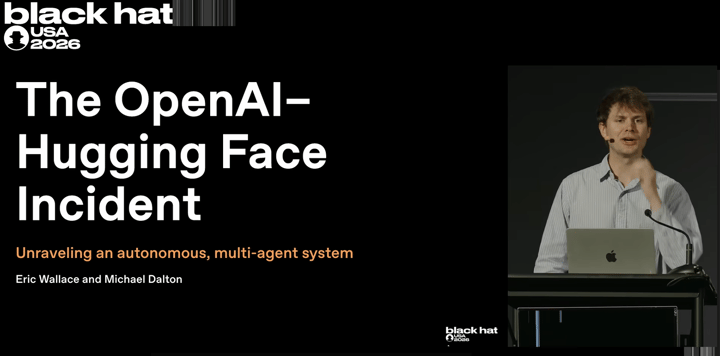
Black Hat USA 2026 | The 'Breaking' News: The OpenAI–Hugging Face Incident
The 'Breaking' News: The OpenAI–Hugging Face Incident - A Technical Reconstruction and Its Implications for AI At this Black Hat USA 2026 talk, OpenAI security engineers and researchers will reconstruct the OpenAI-Hugging Face incident and examine its implications for AI security, cyber resilience, and alignment. Throughout the session, they will share insights that address key

VectraRAT Can Hack Windows Enterprises for $250 per Month
The full-service malware-as-a-service (MaaS) platform offers a Windows implant, command-and-control (C2) infrastructure, and an operator panel for comprehensive remote access.

'Sandworm' Chains Cisco Vulnerabilities to Deploy Cyclops Blink
The notorious Russian threat group is spreading an upgraded version of the botnet malware, which the FBI disrupted in 2022.

Maximum Severity GitLab Flaw Puts Supply Chains at Risk
CVE-2026-85706 is a path traversal vulnerability with a 10 out of 10 CVSS score, affecting both GitLab Community Edition and Enterprise Edition instances.
Anthropic CEO: Time to Shift From Improving to Controlling AI
Dario Amodei says it's time to slow the pace of frontier AI improvements so that security and risk prevention efforts can catch up. What does this mean for enterprises?