Field notes from the edge.
What our engineers learned this week. Hands-on technical deep-dives, postmortems, and strategy frameworks.
 AI
AIAdversarial Clothing Designed to Fool Facial Recognition Systems
Companies are manufacturing adversarial clothing claiming to confuse facial recognition systems, but these products lack rigorous testing and verification. While they may serve as visible symbols of resistance to surveillance, there's no reliable evidence they effectively protect against facial recognition technology, and updated algorithms could easily overcome any anti-surveillance properties.
 AI
AIFacial Recognition at Madison Square Garden
Madison Square Garden has been using facial recognition technology to screen all visitors, including flagging activists who oppose such surveillance systems. The system was notably disabled for Taylor Swift's wedding at the venue, highlighting a growing disparity where wealthy individuals can opt out of surveillance while the general public cannot.
 AI
AIAxon Is Another License Plate Surveillance Company
Municipalities like Denver are replacing Flock license plate surveillance systems with Axon alternatives, but this switch offers minimal privacy improvements. Both vendors' automated license plate reader (ALPR) systems collect extensive personal data beyond just license plates, making the transition largely cosmetic from a privacy perspective.
 AI
AIThe FCC Wants to Eliminate Burner Phones
The FCC has proposed a rule requiring telecommunications providers to collect and store extensive personal information—including government-issued ID numbers and physical addresses—for all phone customers, effectively eliminating anonymous 'burner phones.' While positioned as an anti-scam measure, the proposal has drawn criticism from privacy advocates who compare it to authoritarian surveillance
 AI
AIEnhanced License Plate Tracking
Surveillance company Leonardo is developing SignalTrace technology that augments automatic license plate readers (ALPRs) with Bluetooth sensors to capture unique identifiers from mobile phones and wearables in passing vehicles. This enhancement transforms ALPRs from vehicle-tracking devices into tools capable of identifying and tracking specific individuals, significantly expanding law enforcement
 AI
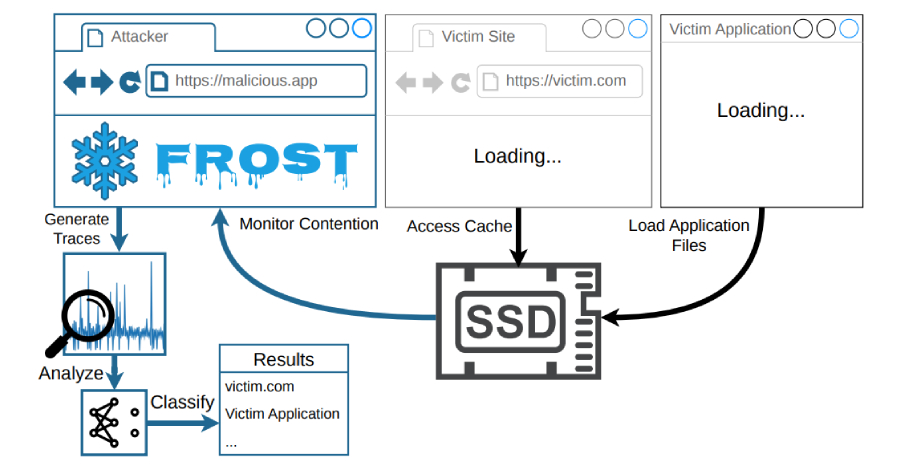
AINew FROST Attack Lets Websites Track What Sites and Apps You Open via SSD Timing
Researchers at Graz University of Technology have discovered FROST, a new attack vector that allows malicious websites to track users' browsing activity and application usage through JavaScript-based SSD timing analysis. The attack requires no special permissions, native code, or browser extensions, operating silently in the background by monitoring storage drive contention patterns.