A few weeks ago I presented to a small group of commercial and technology leaders from Brazilian agribusiness at the AWS office in São Paulo. My talk ran through where generative AI fits across the different stages of an agribusiness operation, and the point I kept returning to is that the markets we call traditional are exactly the ones where keeping up with this technology decides who ends up ahead of the curve.
Nobody there was arguing about whether AI belongs in agriculture. The questions were about delivery: who receives the output, in which language, on which device, often while driving between farms. That is why a launch I might otherwise have filed under routine leads my list this week.
The Amazon Polly Generative engine upgrade added 14 new voices, two of them in Brazilian Portuguese. When your user has both hands on a steering wheel, the interface is a voice. Presenting “GenAI no Agronegócio Brasileiro” at the AWS office in São Paulo.
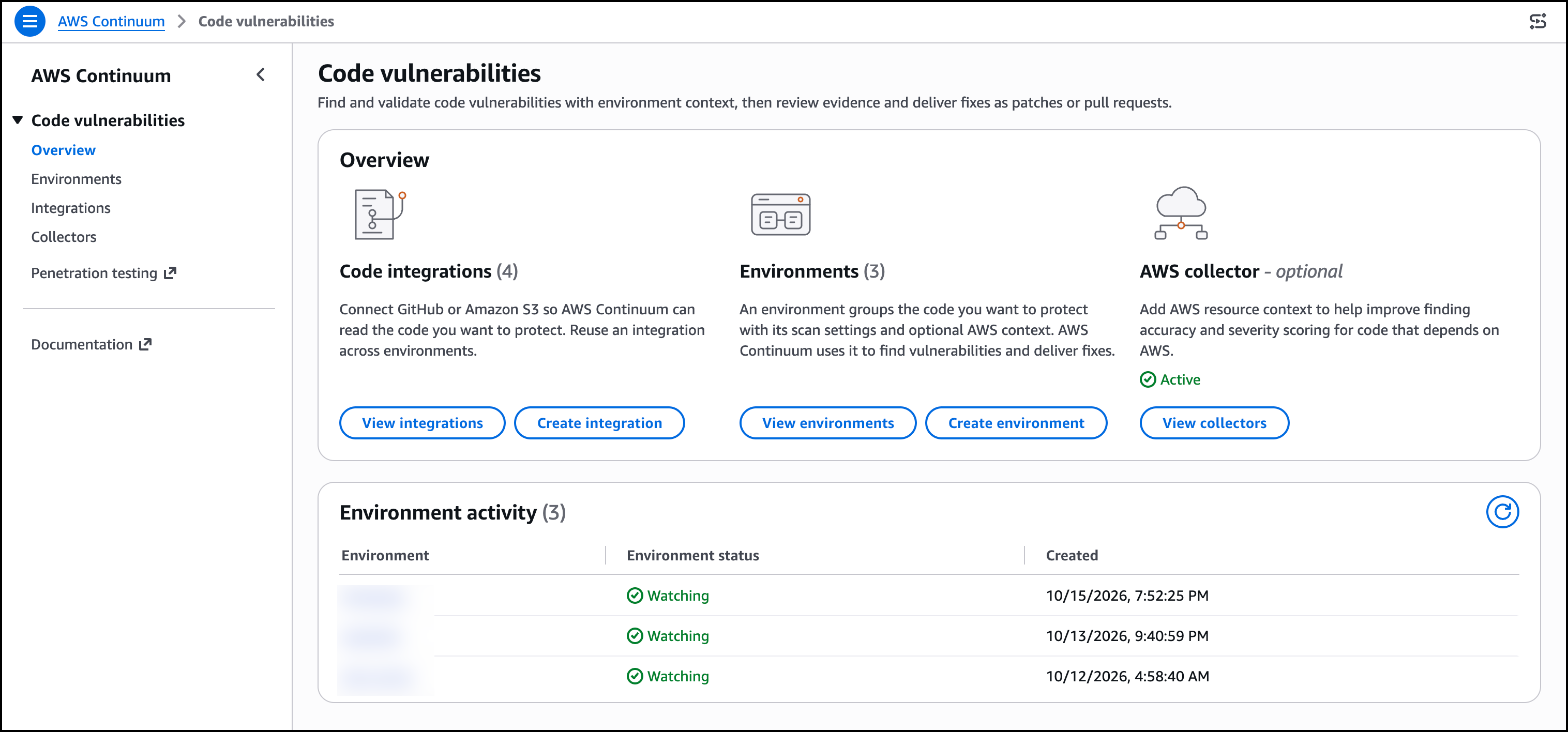
The rest of the week had a sharper edge. The biggest launch is a security service built on the premise that the gap between a vulnerability being disclosed and a vulnerability being exploited has effectively closed, and AWS published the honeypot evidence for exactly that in the same week. Now, let’s get into this week’s AWS news… AWS Continuum for code vulnerabilities is now generally available AWS Continuum reframes vulnerability management as an end-to-end job rather than a scanner that hands you a list.
It builds a context graph from your repositories and your AWS environment, assigns each finding an evidence level, and reproduces exploitable findings in an isolated sandbox with proof-of-concept code so you see the issue rather than a severity label. It ranks issues by how close the attack path runs to business-critical systems, then opens the fix as a pull request.
The control boundary matters: every remediation currently requires human approval, so you review and merge the pull request, with autonomous classes of fix gated behind confidence thresholds for the future. The “why now” came from AWS’s own honeypots in the same week. Amazon Threat Intelligence found a PHP2Shell exploitation attempt in MadPot telemetry dated October 17, four days before CVE-2026-109618 and CVE-2026-109619 were publicly disclosed, and on disclosure day proof-of-concept exploits were circulating around 02:00 UTC, roughly twelve hours before the embargo was due to lift at 14:00 UTC.
The practical reading is direct: a patch window measured in days assumes a delay that no longer exists, and an investigation should start from the earliest known exploitation rather than from the disclosure date. AWS also published the AWS WAF mitigations for the same CVEs. Continuum is available in US East (N.
Virginia) and US West (Oregon). Introducing Amazon ECS Gateway Amazon ECS Gateway splits the work of exposing a service between the people who own the network and the people who own the application. Platform teams define one gateway with the organization’s subnets, security groups, TLS certificates, listener settings, and AWS WAF web ACLs.
Application teams opt in by adding a gateway connector to the service definition, and ECS gives them an ACM certificate, a unique DNS hostname, listener rules, a target group, and a security group that admits traffic only from the Application Load Balancer. The numbers make the economics clear: up to 25 services share a single ALB, ECS provisions the first ALB on first connect and removes ALBs when they are no longer needed, and a gateway can associate with up to 10,000 clusters, with five gateways per cluster.
You can adopt it incrementally with UpdateService while your existing load balancer stays in place. Amazon ECS Gateway is available in all commercial Regions where Amazon ECS is available, at no additional charge. Last week’s launches Here are some launches that caught my attention this week.
Amazon Polly delivers a major upgrade to its Generative engine – The Generative engine now runs a larger, more expressive catalog: 57 generative voices across 11 languages and 25 locales, with 14 new voices across 9 locales and Hindi and Finnish generally available for the first time. Two of the new voices are Brazilian Portuguese, Leo and Carolina. It is a drop-in upgrade, so the voice names, the same SynthesizeSpeech call, and the price all stay the same while the output gets more natural.
AWS announces TorchNeuron: native PyTorch support for AWS Trainium (public beta) – TorchNeuron is an open source PyTorch backend that lets you run your model on Trainium by switching to . to(‘neuron’), a configuration change instead of a rewrite, with eager execution and torch. compile intact.
It integrates with the Neuron Kernel Interface for custom operators, and it works on Trainium2 and Trainium3 instances. If you want the bigger picture on why hardware choice should not lock in your software, the AWS Insights piece on that theme is a good companion read, and the release lands alongside AWS Neuron 2. 33 .
New ways to customize models with Amazon SageMaker AI, without managing GPUs – Training sessions are now generally available, giving you control of the post-training loop, including custom loss functions and reward signals, while SageMaker AI handles GPU allocation, distributed execution, fault recovery, and checkpoint storage. You pay for the tokens SageMaker AI processes, and the meter stops while your reward function scores a batch.
There is a full technical walkthrough , the training session APIs , and new support for Muse Glimmer, Qwen 3. 8, and Ministral 3 . Structured outputs for Claude models available on Amazon Bedrock – You can now get schema-compliant JSON back from any Anthropic Claude model on Amazon Bedrock, across both the bedrock-runtime and bedrock-mantle endpoints, without custom parsing, retry logic, or post-processing.
Originally published at aws.amazon.com